Maybe it is your first rodeo
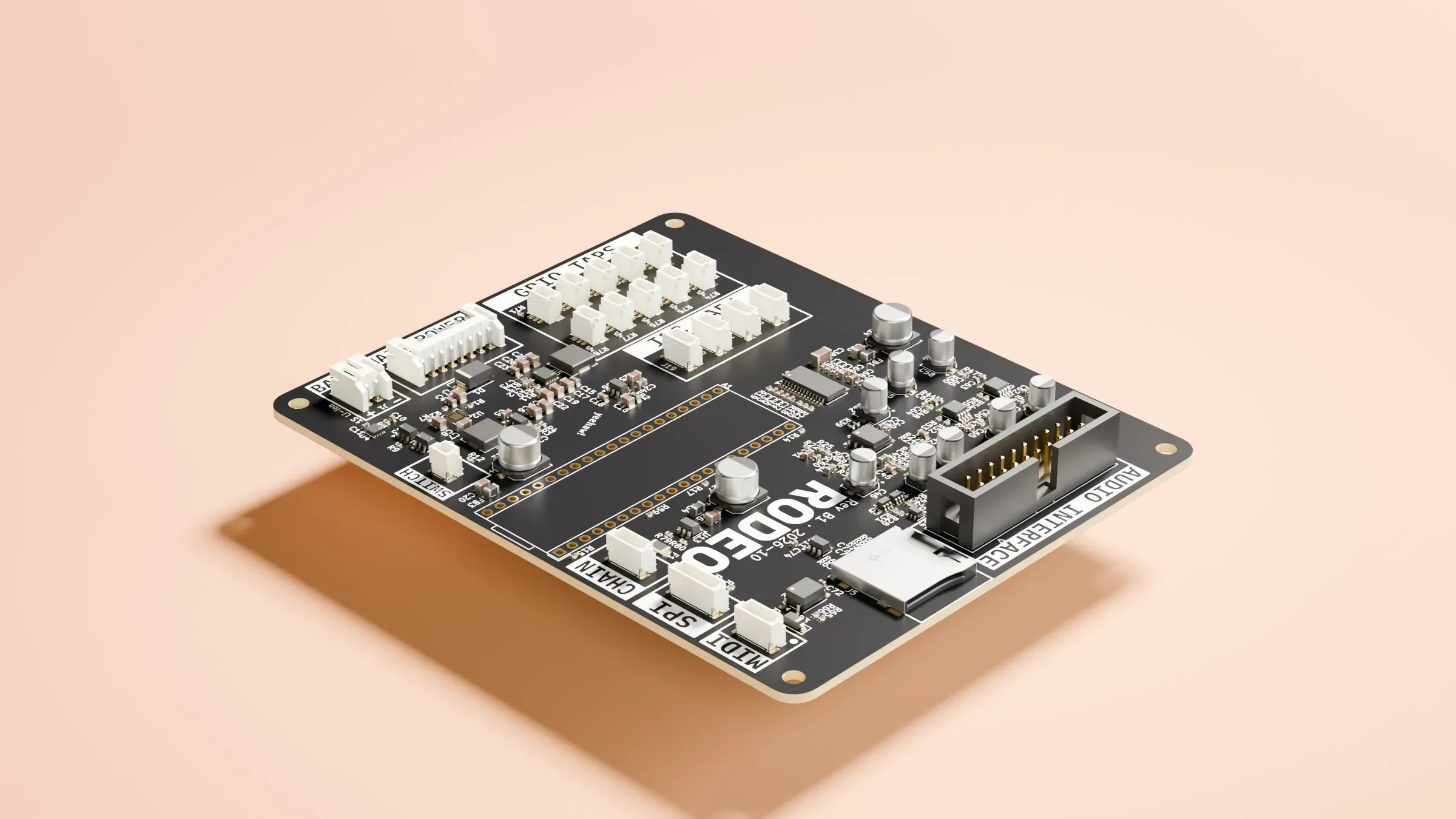
RODEO is a carrier board for the Electrosmith Daisy and a chain of control satellites. Four ins, four outs, ten I/O connectors, and as many knobs as your panel has room for — without you drawing a single PCB. It runs on a battery and charges over USB-C, so what you build can leave the desk.
The first boards arrived on 28 October and they work: audio, MIDI, USB, the SD card and a satellite chain have all passed on real hardware since. Bring-up also found two faults, and they are written down beside the boards they are on — see the boards.
-
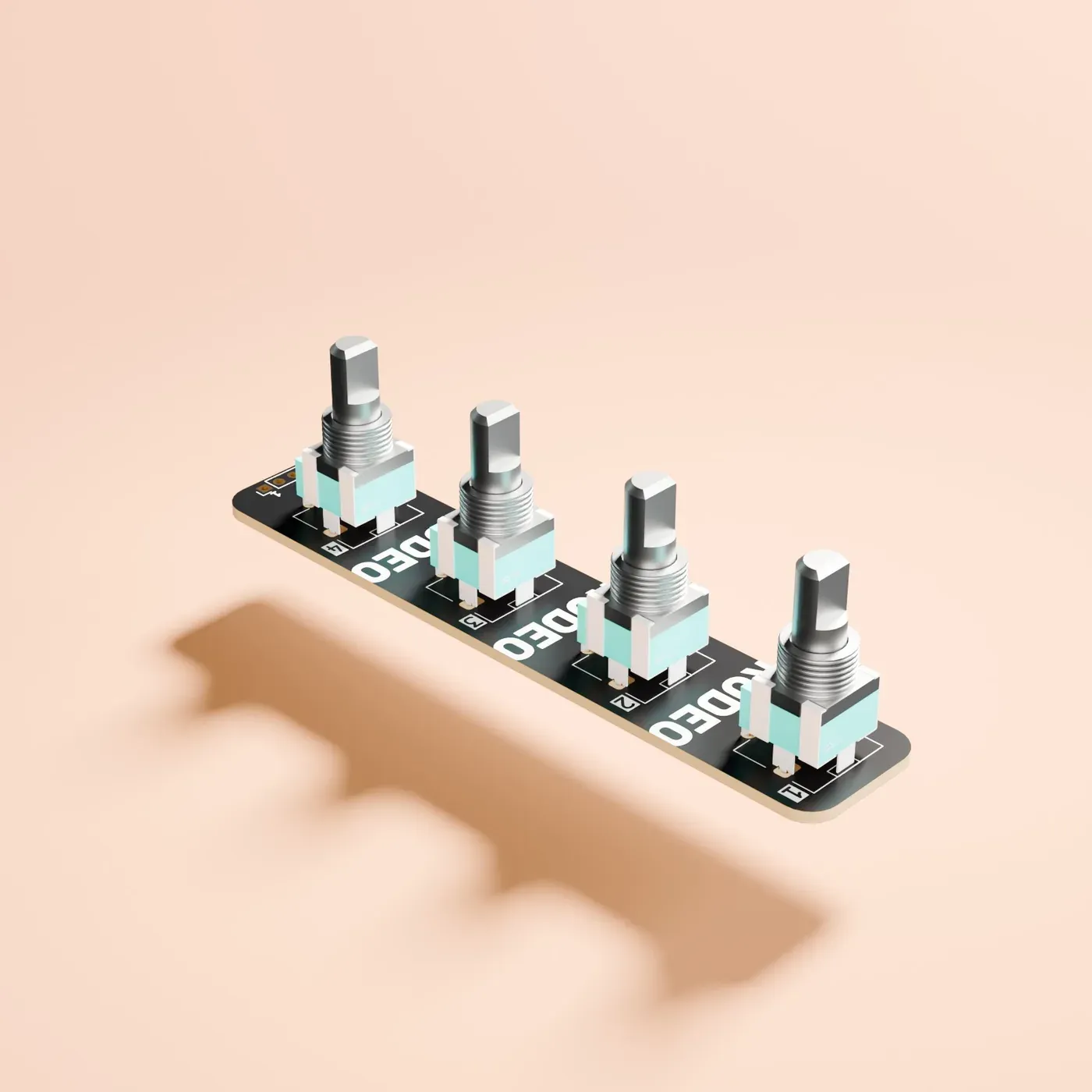
Rev-B — rodeo-pot-bank-4 · CAD render -
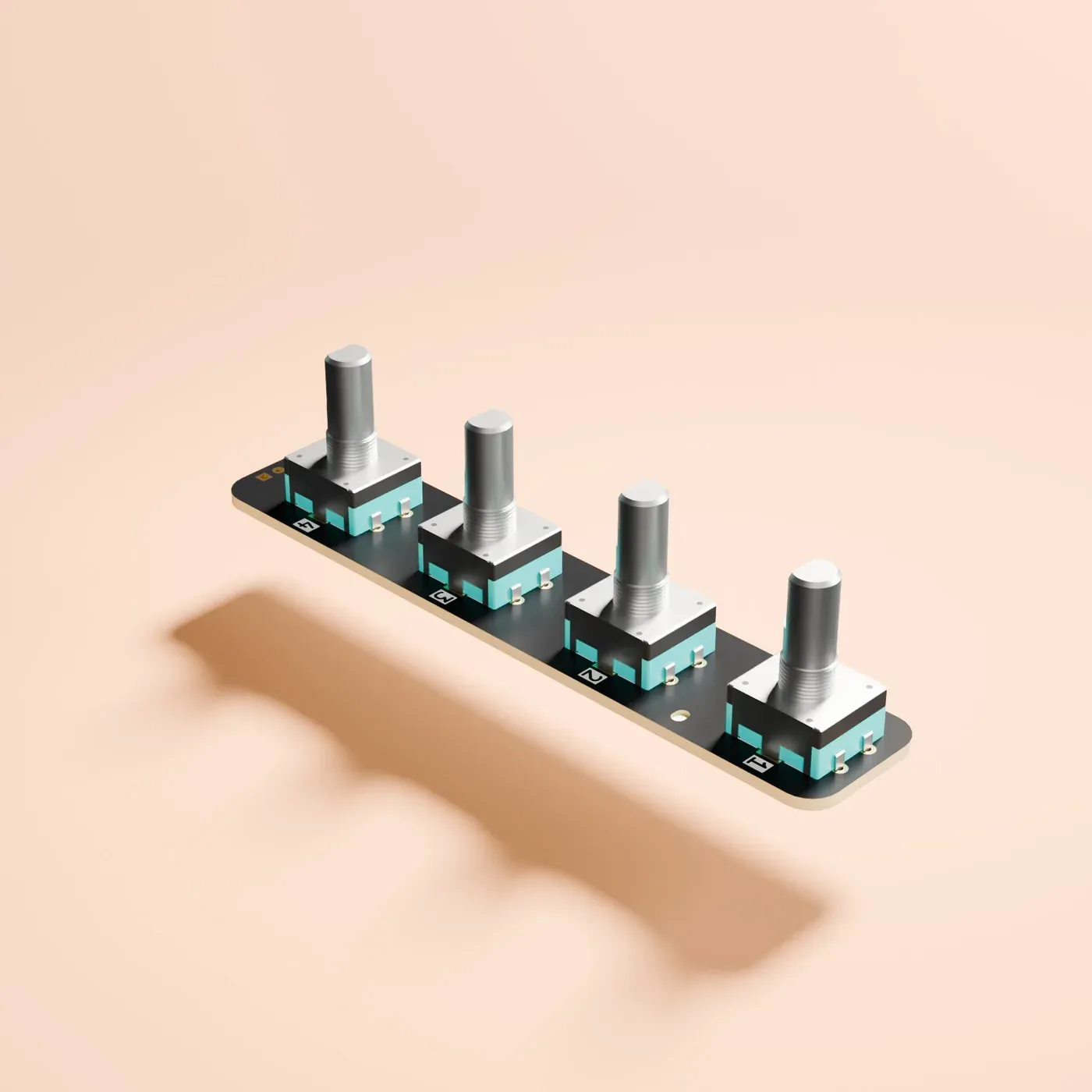
Rev-B — rodeo-encoder-bank-4 · CAD render -
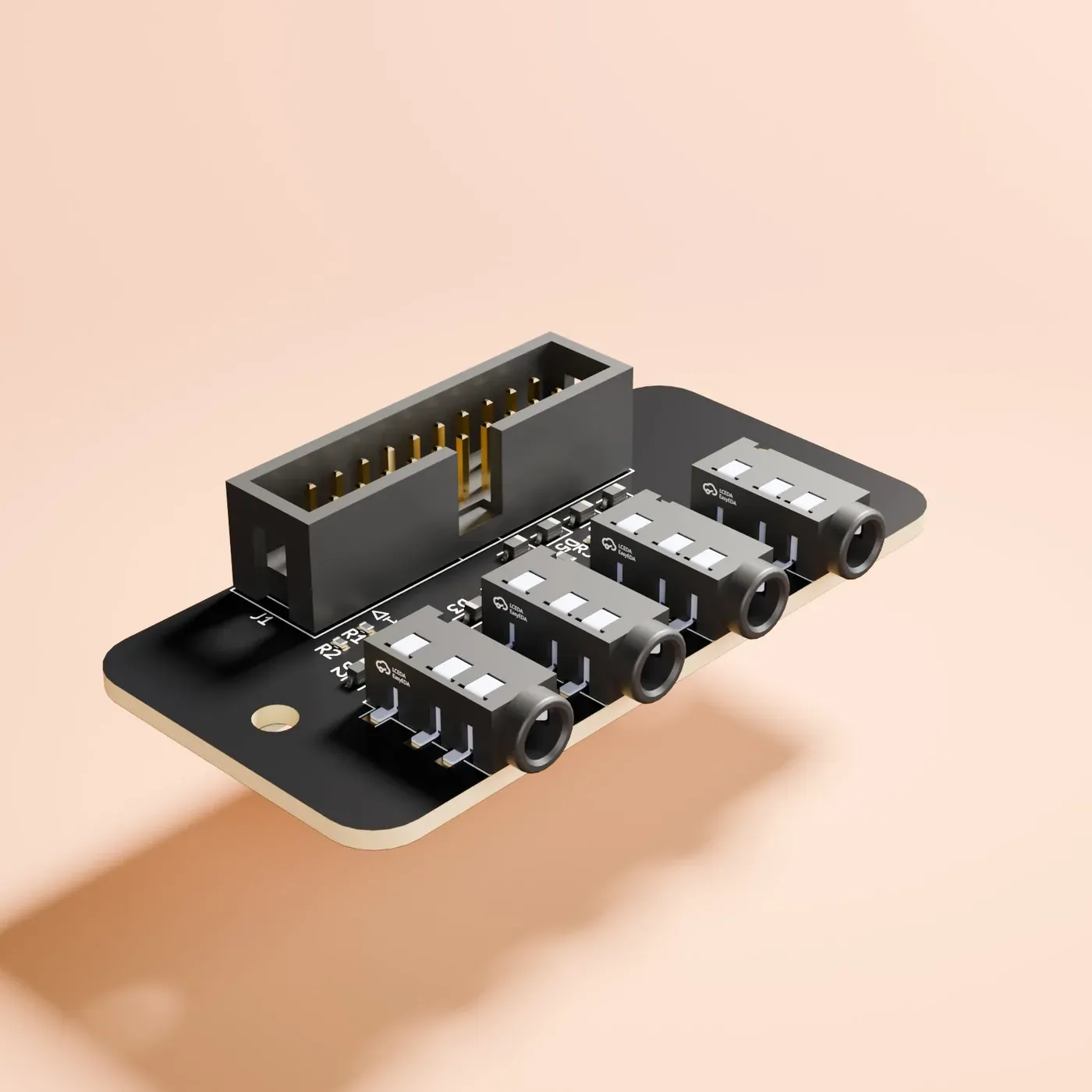
Rev-B — rodeo-audio-3.5mm · CAD render
How does it work?
A motherboard and her satellites
- 01
Pick your controls
Satellites carry four pots, four encoders or four lit buttons, and there are single-knob boards for the control that does not belong in a row. Each one reads its own controls and passes them along, so more knobs is another satellite — not another motherboard.
- 02
Chain them up
One cable from satellite to satellite, and the last one closes the ring by itself. Position in the chain is the address, so there is nothing to configure and no jumpers to set.
- 03
Give it a voice
A Daisy Seed does the DSP with libDaisy and DaisySP, and rodeo-sdk handles the hardware around it: both codecs, the chain, the SD card, and one USB-C carrying audio, MIDI, a serial port and disk mode. All of that has now run on a Rev B board.
Want in?
Rodeo goes to Kickstarter in January 2027. The waitlist hears first, and day-one backers are planned to get an early-bird price. One email to confirm, then nothing until there is news.